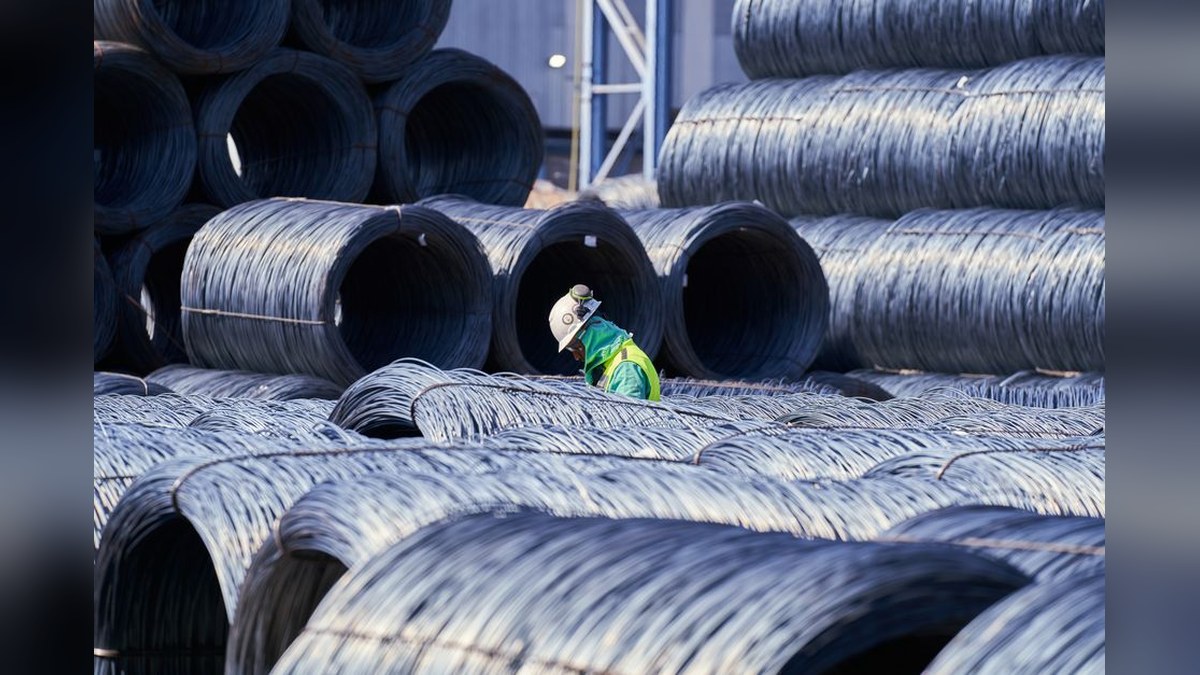
Latin American Steel Split: Ternium Rises, CSN Slumps on China — Photo: Photo by Willians Huerta on Pexels
Latin American Steel Split: Ternium Rises, CSN Slumps on China
Latin American steel stocks went their separate ways on Monday, sketching a hemispheric map of where demand is real and where it is merely hoped for. The SLX ETF, a basket of global steel-producer stocks, barely stirred at US$105.59, up 0.10 per cent, the stillness of a surface that conceals a fast current underneath.
Ternium led the regional names with a 1.02 per cent gain to US$49.74 as investors bet that Mexican industrial output and North American steel premiums would continue to reward the company’s vertically-integrated slab-to-coil mills. Gerdau followed with a 2.02 per cent rise to US$5.06, while CSN’s New York depositary receipt tumbled 6.07 per cent to US$0.9299, the board’s heaviest fall, according to riotimesonline.com.
The broad Latin American steel complex appears to be gently re-rating, with capital flowing towards mills that are short US scrap and long North American demand, and away from Brazilian blast-furnace operators that are price-takers on Chinese export parity. Chinese hot-rolled coil export volumes have accelerated through July, with most cargoes clearing at a freight-adjusted discount to domestic Brazilian transaction prices, raising the political temperature in Brasília ahead of a scheduled tariff review.
The variable to watch is whether Brazil’s government accelerates an increase in the common external tariff on steel, a move that could reshape domestic flat prices and abruptly reverse the underperformance of CSN and Usiminas.
The board
The day’s price screen snapped a clear fault line. CSN’s ADR at US$0.9299 was the outlier, a level that prices in a challenging quarter for Brazilian flat-steel spreads between slab cost and hot-rolled coil revenue. Gerdau’s US$5.06 close, by contrast, reflected a mini-mill operator that buys scrap in reais or pesos and sells longs into markets where electric-arc furnace (EAF) capacity utilisation is running high.
Ternium at US$49.74 sits between the two, a Mexico-based slab and coil producer whose revenue leans heavily on the US spot HRC price, which has stayed above the psychological US$800 per short ton mark for several weeks. The SLX ETF’s US$105.59 print captures a global sector still wrestling with Chinese overcapacity: the fund’s top holdings include non-Latin names whose margins are also under pressure from seaborne flat steel.
| Asset | Level | Change |
|---|---|---|
| Steel (SLX ETF) | US$105.59 | +0.10% |
| Gerdau | US$5.06 | +2.02% |
| CSN (ADR) | US$0.9299 | -6.07% |
| Ternium | US$49.74 | +1.02% |
Source: EODHD close, 2026-08-03, as reported by riotimesonline.com.
What moved it
Four drivers aligned to produce the session’s dispersion. First, Chinese hot-rolled coil export offers continued to slip, with cargoes arriving at Brazilian ports at prices well below domestic mill cash costs. Second, fresh US tariff talk added a layer of uncertainty for Brazilian exporters eyeing the North American market. Third, a seasonal lull in domestic flat-steel orders from auto, white-goods and machinery makers softened demand. Fourth, growing political pressure in Brasília to raise the common external tariff on steel kept the sector in the headlines.
CSN’s 6.07 per cent slide to US$0.9299 for its ADR was the session’s standout. The move reflected a cocktail of anxiety: a fresh weekly jump in Chinese hot-rolled coil export volumes, growing political pressure in Brasília to raise the common external tariff on steel, and a seasonal lull in domestic flat-steel orders from auto white-goods and machinery makers. Usiminas, which reports on the B3 in Belo Horizonte, traded in sympathy, squeezed between high slab input costs and a domestic flat market that cannot easily absorb both local output and import tonnage.
A hemispheric split
Behind the price moves sits a regional industry caught between two conflicting currents. On one side, North American nearshoring and a tight scrap market are keeping EAF-based long-steel producers like Gerdau’s US mills profitable. On the other, Brazilian integrated mills that depend on export parity pricing for hot-rolled and cold-rolled coil are being undercut at home by Chinese cargoes priced at roughly a ten per cent discount to domestic list.
Mexico’s advantage is its geography: Ternium’s slab can cross the Rio Grande into Texas without a tariff, while a Rio de Janeiro mill must fight an Atlantic freight disadvantage to reach the Gulf Coast. Gerdau advanced 2.02 per cent to US$5.06, lifted by relatively steady Brazilian long-steel consumption from civil construction and by investor relief that its North American mini-mill footprint provides an earnings hedge against imported plate and hot-rolled coil.
Ternium, which runs large slab and coil operations in Mexico, added 1.02 per cent to US$49.74 as Mexican auto assemblies stayed brisk and US hot-rolled coil prices held a premium above US$800 per short ton, drawing Mexican exports north without incurring the Section 232 tariff that constrains overseas producers.
What matters today
The day’s divergence underscores a hemispheric split where Mexican steel rides US industrial strength, while Brazilian flat mills face a mounting fight against cut-price Chinese tonnage. Brazilian auto and construction demand are pulling in opposite directions, with construction showing steady offtake while vehicle output faces inventory correction, softening Usiminas’ plate orders.
For investors tracking the region, the key question is whether Brasília accelerates the tariff review. A faster move could reshape domestic flat prices and abruptly reverse the underperformance of CSN and Usiminas, while a slower path leaves Brazilian mills exposed to the relentless pressure of Chinese export parity.