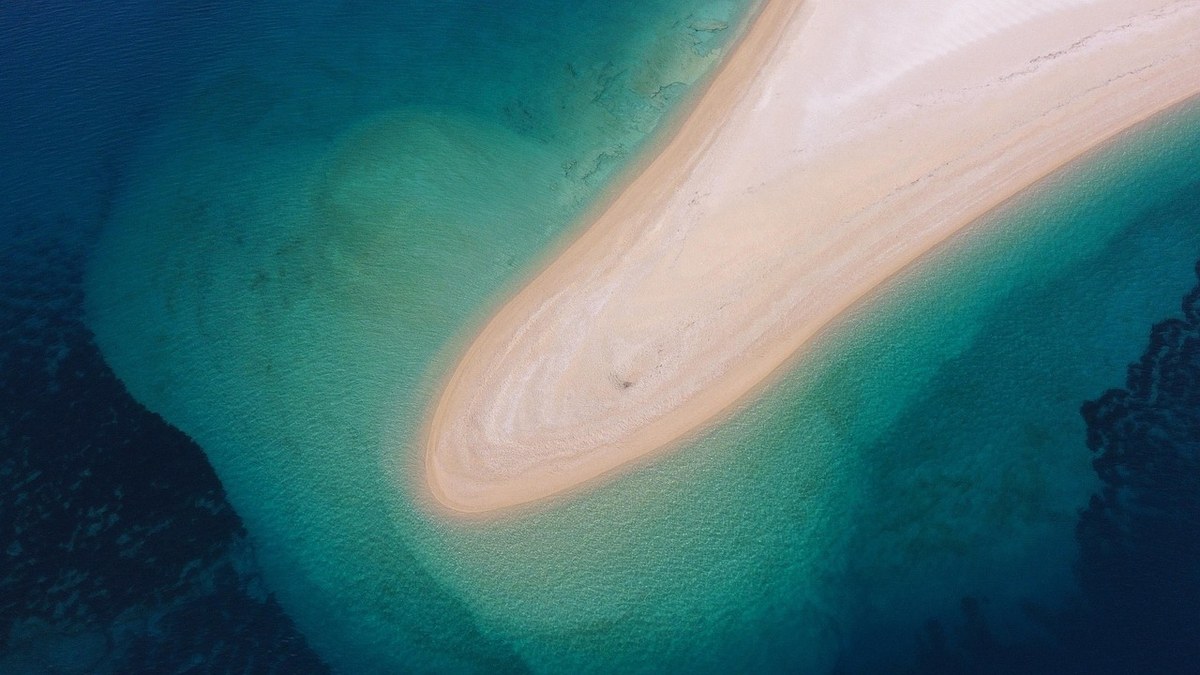
croatia, golden horn beach, sea, sand bar, aerial view, beach, nature, sand, ocean, croatia, croatia, croatia, sea, sea, sea, sea, sea, aerial view, aerial view, beach, sand, sand, ocean — Photo: Photo by EclipseChasers on Pixabay
Croatia's Strongest July in Two Years Contrasts With Türkiye's Slip
Two Mediterranean heavyweights are heading into peak season on very different paths. Türkiye faces softer visitor numbers, high inflation and disruption tied to the Persian Gulf conflict, while Croatia just celebrated its strongest July in two years.
The contrast offers a snapshot of a shifting European tourism market where price, accessibility, geopolitical stability and value for money increasingly shape traveler decisions.
On Istanbul’s famous Istiklal Street, the iconic red tram still glides past currency exchange offices, restaurants, shops and hotels full of international visitors. Yet behind this familiar scene, Türkiye’s latest indicators are raising concerns.
Tourist arrivals reportedly slipped around 5 percent year-on-year from April to June, to roughly 15.5 million visitors. Regional conflict disrupted travel patterns just as persistent domestic inflation made Türkiye pricier for international tourists.
Croatia, meanwhile, is moving in the opposite direction.
Croatia Records Its Best July in Two Years
Croatia welcomed 4.7 million tourist arrivals and logged 29.6 million overnight stays in July 2026, according to eVisitor data. Arrivals rose 2.5 percent compared with July 2025, while overnight stays were up 1 percent.
It was Croatia’s strongest July result in two years.
During the first seven months of 2026, Croatia registered 12.4 million arrivals and 59.1 million overnight stays, both roughly 1 percent above the same period in 2025.
The Adriatic remained the heart of Croatian tourism, accounting for 56.1 million overnight stays. Mainland destinations, including Zagreb, recorded more than 3 million nights.
Germany continued to be Croatia’s most important foreign source market. German travelers generated 10.3 million overnight stays in the first seven months, followed by domestic Croatian tourists with 7.6 million and visitors from Slovenia with 6.7 million.
Austria contributed 4.3 million nights, Poland 3.9 million, the Czech Republic 3 million, the United Kingdom 2.2 million and Hungary 2.1 million.
Istria led Croatia’s regions with 16.7 million overnight stays, followed by Split-Dalmatia County with 11.1 million and Kvarner with 9.7 million. Dubrovnik, Rovinj, Poreč, Split and Umag ranked among the country’s leading individual destinations.
Croatian Tourism Minister Tonči Glavina said the July figures demonstrated the resilience and competitiveness of the country’s tourism sector. He also pointed to an 18 percent increase in the value of fiscalised receipts and an 8 percent increase in the number of receipts compared with July 2025.
Croatian Tourist Board director Kristjan Staničić highlighted an important change in consumer behavior: travelers are increasingly making last-minute decisions and paying closer attention to value for money.
That trend may help explain the broader contrast with Türkiye.
Türkiye Faces an Inflation Challenge
Türkiye began 2026 from a relatively strong position. During the first quarter, the country recorded approximately 9.26 million departing visitors, an increase of 1.5 percent, while tourism revenue climbed 4.2 percent to almost US$9.9 billion.
Conditions became more difficult during the second quarter.
Foreign arrivals fell sharply in April, declining 9.44 percent year-on-year to approximately 3.53 million. Arrivals from Germany fell 17.46 percent, while visitors from the United Kingdom declined 15.14 percent.
Istanbul nevertheless remained Türkiye’s leading international gateway.
The challenge is therefore not necessarily a loss of interest in Türkiye. Istanbul, Antalya, Bodrum, Cappadocia, İzmir and the Turkish Riviera remain among the Mediterranean region’s most recognizable tourism destinations.
Instead, affordability is becoming a more significant concern.
Türkiye’s annual consumer inflation stood at 32.11 percent in June 2026. Prices in restaurants and accommodation increased further during the month, adding pressure to tourism costs.
For many years, weakness in the Turkish lira made Türkiye particularly attractive to travelers carrying euros, pounds and dollars. But currency depreciation does not automatically guarantee an inexpensive holiday when hotel rates, restaurant bills, transportation costs and attraction prices rise rapidly.
The currency exchange offices lining Istanbul’s tourism districts illustrate the contradiction. International visitors may receive more lira for their foreign currency, but the more important question is how much those lira can actually buy.
Inflation has therefore become more than a domestic economic issue. It is increasingly a tourism competitiveness issue.
Conflict Changes Travel Patterns
Türkiye’s tourism slowdown is not about prices alone.
The Persian Gulf and wider Middle East conflict has disrupted aviation and affected traveler confidence. Airlines have faced airspace restrictions and changing flight patterns, while travelers have increasingly delayed booking decisions because of uncertainty.
Türkiye is not a party to the conflict, and Turkish authorities have emphasized that Istanbul, Antalya, Bodrum, İzmir, Cappadocia and other major tourism destinations remain open and functioning normally.
However, tourism does not operate according to national borders alone.
Airspace closures, airline schedules, fuel costs, insurance, connecting traffic and consumer perceptions can influence demand far beyond the immediate conflict zone.
This is particularly relevant for Türkiye because international leisure tourism depends heavily on air connectivity.
Croatia Has an Accessibility Advantage
There is not enough evidence to conclude that travelers who might otherwise visit Türkiye are simply switching their holidays to Croatia.
The countries have different tourism products, source markets and visitor profiles.
Nevertheless, Croatia enjoys an important advantage during periods of uncertainty: a large share of its customers can arrive by road from nearby European countries.
Germany, Slovenia, Austria, Hungary, the Czech Republic and Poland are all important Croatian tourism markets. For millions of Central European travelers, an Adriatic holiday can be reached without depending entirely on international aviation.
Croatia also faces its own challenges. Rising prices have generated complaints about value for money, while destinations including Dubrovnik continue to deal with congestion, housing pressures and overtourism.
Maintaining competitiveness will therefore require Croatia to prevent strong demand from pushing prices to levels that could eventually discourage visitors.
Mediterranean Tourism Enters a New Competition
The divergent summer results in Türkiye and Croatia illustrate a wider transformation in Mediterranean tourism, as reported by eturbonews.com. Travelers are weighing affordability, stability and convenience more than ever before.