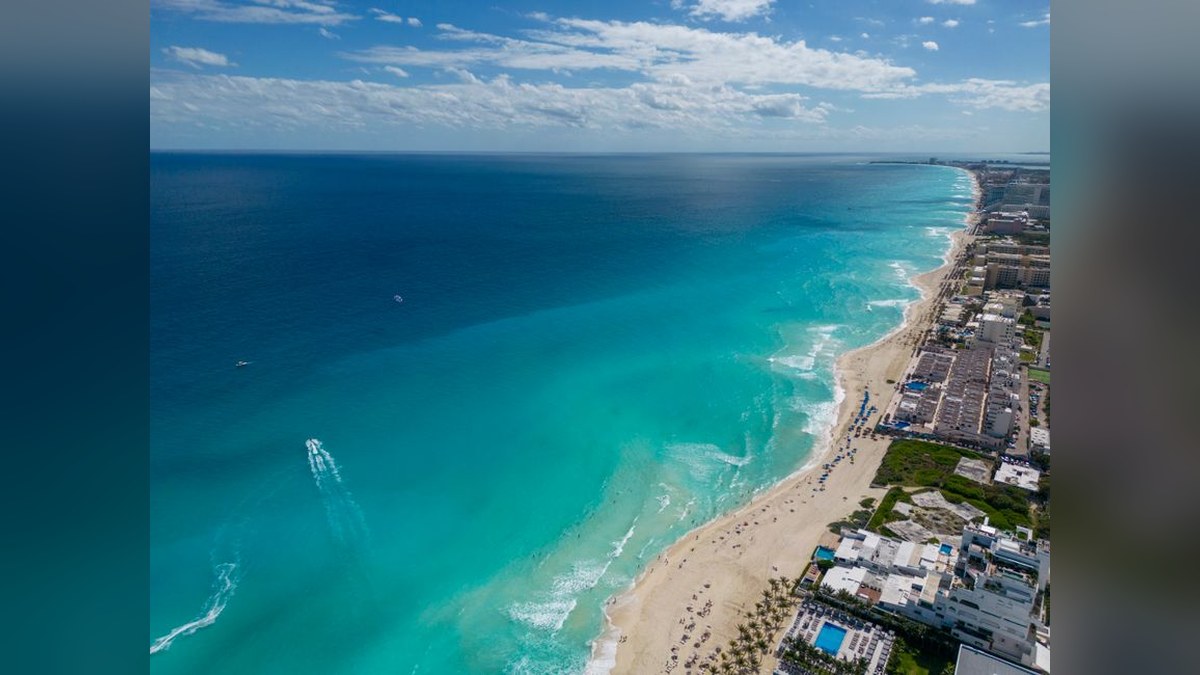
Cancún at 50: What Brazil Can Learn From Mexico's Engineered Tourism Success — Photo: Photo by Israel Torres on Pexels
Cancún at 50: What Brazil Can Learn From Mexico's Engineered Tourism Success
Fifty years ago, Cancún was an empty Caribbean sandbar. Today it anchors a state that drew roughly 20 million tourists in 2024 and ranks as Mexico’s second-busiest airport. The story of how it got there offers a masterclass in destination engineering — and a cautionary tale for Brazil’s own ambitions.
According to skift.com, Cancún was not born from organic demand. In 1969, Mexico’s central bank set out to manufacture a tourism destination from nothing, dispatching a 46-person team of bankers, architects, and economists. They spent two years analyzing hundreds of sites — even simulating hurricanes in a lab — before selecting the sandbar that would become Cancún.
The project’s lead, Antonio Enríquez Savignac, distilled the strategy into one word: ‘Money.’ That focus produced a repeatable five-part template that the state followed meticulously.
First, the government bought the land. Second, it built the infrastructure that private capital wouldn’t touch. Third, it separated the tourist enclave from the workers’ city. Fourth, it invited private hotel investment after the groundwork was laid. Fifth, it targeted a nearby wealthy market — Americans — at prices below competitors like Florida.
The results exceeded all expectations. Cancún grew into Mexico’s second-busiest airport and became the engine of a state that welcomed around 20 million tourists in 2024. The model proved that a destination could be deliberately engineered, not just discovered.
But the article argues that Cancún’s success had less to do with beaches or the enclave design itself. The decisive factors were proximity to an existing rich market and cheap, easy air access. Punta Cana, for instance, built the first privately owned international airport in the region, while poorly connected copies underperformed.
The template was globally exported through the World Bank and shared consultants. It reached Bali’s Nusa Dua, the Dominican Republic’s Punta Cana and Puerto Plata, Turkey’s Antalya, and Egypt’s Sharm el-Sheikh. Each adapted the model to local conditions, with varying degrees of success.
Mexico itself couldn’t always replicate the magic. Repeat attempts at Ixtapa, Loreto, and Huatulco largely faltered where pre-existing demand and air connectivity were absent. The lesson: infrastructure alone doesn’t create a market.
Today’s mega-projects, such as Saudi Arabia’s Red Sea Global and NEOM, abandon the original formula’s low-price, high-volume, proven-demand conditions. They bet on luxury and spectacle instead of accessibility and value.
For Brazil, the Cancún story offers both inspiration and warning. Destinations like the Northeast’s beaches or the Amazon’s eco-lodges could benefit from state-led infrastructure and targeted air routes. But without proximity to a wealthy market or affordable flights, even the most beautiful coastline won’t guarantee success.
The key takeaway from skift.com’s retrospective is clear: tourism development is a financial product as much as a physical place. Brazil’s planners would do well to study the five-part template — and the reasons some copies failed — before breaking ground on the next big destination.