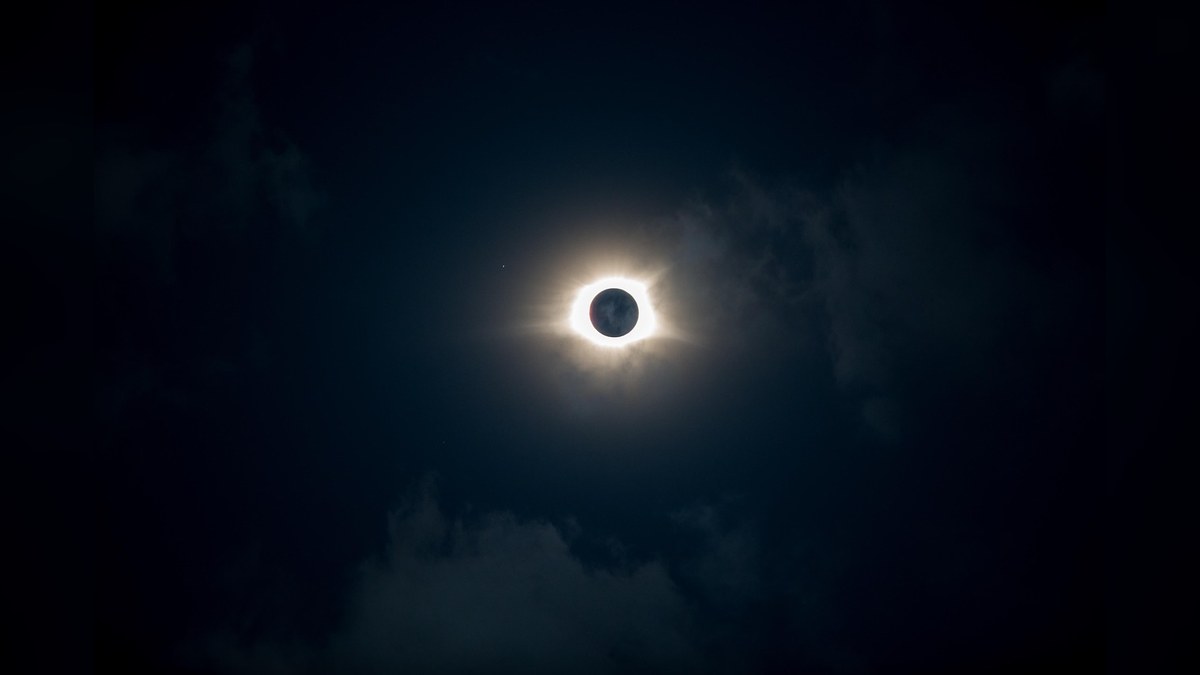
eclipse, great american eclipse 2017, solar eclipse, corona, nature, dark, moon, ring, total, science, space, black moon, black science, eclipse, eclipse, solar eclipse, solar eclipse, solar eclipse, solar eclipse, solar — Photo: Photo by bdabney on Pixabay
Europe's 2026 Solar Eclipse Draws Millions, Boosts Tourism
A few minutes of darkness have produced months of travel demand, hundreds of millions of euros in economic activity, and a reminder that one of nature’s most spectacular sights can also permanently damage the human eye.
Millions of people looked skyward across Europe on Wednesday as the Moon passed directly between Earth and the Sun, producing the total solar eclipse of August 12, 2026, according to eturbonews.com.
The path of totality crossed parts of the Arctic and eastern Greenland before reaching western Iceland, northern Spain and a small section of Portugal. Much of the rest of Europe experienced a substantial partial eclipse. In the narrow totality zone, daylight briefly faded and the Sun’s normally invisible outer atmosphere — the corona — appeared around the black silhouette of the Moon.
But the eclipse was more than an astronomical spectacle. It became a major tourism event — particularly for Spain.
A €300 Million-Plus Shadow
Spain emerged as one of the biggest economic beneficiaries of the eclipse. Government estimates ahead of the event put the additional economic impact at roughly €347 million, with approximately 446,000 additional tourists expected because of the eclipse. Other reporting put the number of foreign visitors travelling specifically for the event at around 460,000.
The effect was especially visible in hotels, holiday rentals, restaurants, transport and rural destinations that would normally receive far less international attention.
Industry data released before the eclipse showed flight bookings to Spain and Iceland running about 25% above the previous year, while hotel occupancy was up around 16% and average daily hotel rates approximately 36% higher.
Some individual destinations experienced much more extreme increases. Analysis of Spanish holiday rentals found average rates across eclipse markets almost doubling, while Burgos recorded increases approaching 289% in nightly rates. In Logroño, occupancy for the eclipse period reportedly climbed from about 40% a year earlier to around 75%.
Iceland experienced an even more dramatic price squeeze. Data from Lighthouse showed Reykjavík hotel rooms averaging around $1,012 per night in earlier eclipse-week pricing data, while short-term rentals averaged about $1,172. Other data closer to eclipse day put the average Reykjavík hotel booking for Wednesday at roughly $793 — still around 98% higher than the equivalent date a year earlier.
The eclipse therefore offers an unusually clear example of astrotourism: travelers choosing destinations specifically because of astronomical phenomena.
Unlike a stadium concert or sporting event, however, the attraction itself costs nothing to stage. The Moon supplies the show. The economic value comes from everything surrounding it — flights, accommodation, rental cars, restaurants, tours, cruises, viewing events and longer holidays.
Spain may get another chance very soon.
The Health Risk: Your Eyes Cannot Feel the Damage Happening
The excitement also produced a significant public-health warning. Looking directly at the Sun without appropriate protection can injure the retina, producing a condition known as solar retinopathy. Symptoms can include blurred central vision, distorted vision, increased sensitivity to light or a dark or blind spot near the center of someone’s field of vision.
One of the dangers is that retinal injury does not necessarily announce itself immediately with pain. Someone may therefore stare at the eclipse, believe nothing happened, and notice visual abnormalities later. During Wednesday’s eclipse, online searches related to hurting eyes reportedly surged, suggesting that at least some observers were concerned after viewing the event.
Ordinary sunglasses are not sufficient protection for directly viewing the Sun. Certified eclipse viewers or indirect methods such as pinhole projection are required during the partial phases. Only during the brief period of complete totality, when the bright solar surface is entirely covered, can observers within the path of totality view the corona directly. Eye protection must go back on as soon as the bright Sun begins to reappear.
Anyone who develops persistent blurred vision, a central blind or dark spot, distorted vision or unusual light sensitivity after looking at the Sun should seek professional eye care rather than assuming the symptoms will disappear.
What Actually Happened?
Scientifically, the explanation is remarkably simple. A total solar eclipse occurs when the Moon passes between Earth and the Sun at exactly the right alignment and appears large enough in our sky to cover the Sun’s visible surface.
The Moon is vastly smaller than the Sun, but it is also vastly closer to Earth. By coincidence, their apparent sizes in our sky are similar. The Moon’s darkest shadow — the umbra — then sweeps across a relatively narrow strip of Earth’s surface. Anyone inside that strip experiences totality. People outside it but still within the much larger penumbral shadow see only a partial eclipse.
On August 12, the totality corridor crossed Greenland, Iceland and northern Spain, among other areas, while much larger portions of Europe, northern North America and western Africa experienced a partial eclipse.
But Does an Eclipse Have a Spiritual Meaning?
Science can explain how an eclipse happens. It cannot assign a universal spiritual meaning to it. There is no scientific evidence that a solar eclipse predicts personal transformation, disasters, political events or changes in human destiny.
Culturally and spiritually, however, eclipses have carried enormous meaning for thousands of years. Different societies have interpreted the temporary disappearance of the Sun as everything from danger and cosmic disorder to renewal, purification and rebirth.
In Hindu mythology, eclipses have traditionally been associated with Rahu swallowing the Sun, contributing to customs involving fasting and ritual practices. Other historical traditions imagined supernatural beings attacking or consuming the Sun. In Diné/Navajo tradition, an eclipse can instead represent a sacred period of cosmic order, reflection and renewal. Anthropological accounts describe traditions of remaining indoors, being quiet and treating the event with reverence rather than approaching it simply as entertainment.
Modern spiritual interpretations often describe eclipses metaphorically as moments of endings and beginnings, hidden things becoming visible, transformation or resetting one’s direction. Those interpretations belong to spirituality and culture rather than astronomy, but perhaps that distinction is part of what makes eclipses so fascinating: the same shadow can simultaneously be an orbital calculation, a tourism industry, a scientific laboratory and a deeply emotional human experience.
Where Was the Best Place to See It?
For the August 12 eclipse, the totality path included eastern Greenland, western Iceland, northern Spain and a small part of northeastern Portugal, with totality also crossing remote Arctic regions.
Spain was particularly attractive because the eclipse occurred close to sunset, producing unusually dramatic viewing conditions. The country consequently became one of Europe’s principal eclipse destinations, with huge crowds converging on locations including Galicia, Bilbao, Burgos, Zaragoza, Valencia and the Balearic Islands. Authorities deployed tens of thousands of personnel while managing traffic, heat and wildfire risks.
Iceland attracted another wave of international eclipse travelers, including cruise passengers. Reports indicated that 31 cruise ships carrying roughly 53,000 people were part of the eclipse tourism influx around the region.
This writer had an excellent view from the top of the parking garage at Nuremberg Main Train Station in Germany.
Missed It? You Don’t Have to Wait Long
Remarkably, another major solar eclipse is less than a year away.